

“One step forward, two steps back, making tracks in a crooked line, bending time, bending time. Through detours, stops, and starts, slow dancing in the dark, bending time, bending time. In a luminescent web so fine, we're connecting stars, earth, and sky.”
— Bending Time, Trisha Leone Sandora
Sometimes it feels like I spend my days waiting for the next thing. This self-limiting act of resistance convinces me I don’t have time or space or energy to do one thing, because I have to do this other thing later. My whiny inner voice protests that I don’t want to get sweaty or wear myself out, or that I don’t have enough time. Sometimes the irony makes me roll my eyes and say, “Seriously?" The struggle is real.
Life is movement. Even when I am still, my body is in motion. My heart beats whether I hold my breath or not. My blood flows whether I am lying in bed, sitting on the couch, or walking on a dirt road. I love this duality. It’s not one or the other—it’s an ebb and flow of all the parts working together. The key is to move with it—whether that means starting, stopping, or finding a way around.
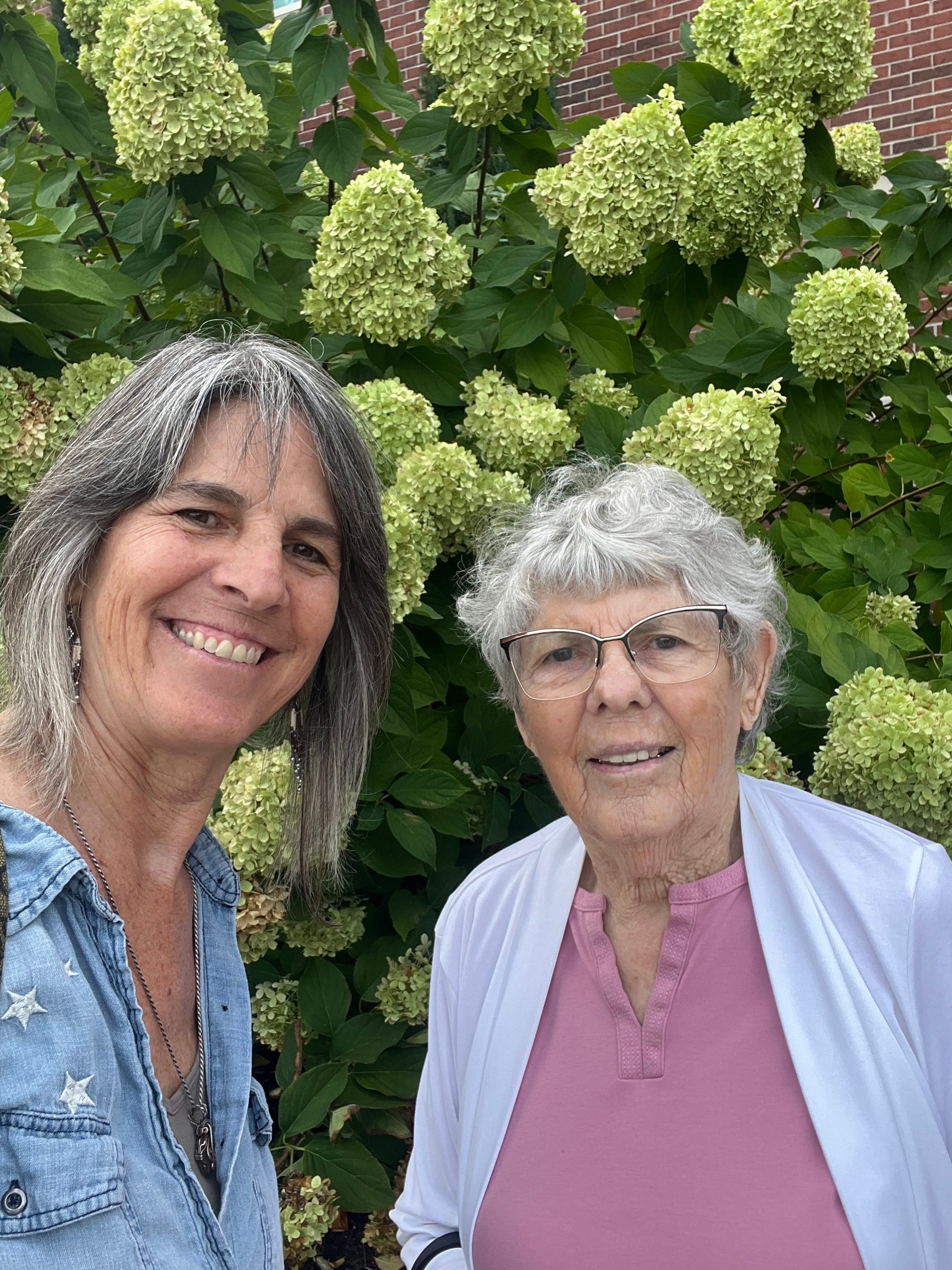
This week, I took my mom for a follow-up appointment with the neurologist after her stroke early last month. Since then, she has had some difficulty remembering or finding common words that she once used with ease. Words are Mom’s jam. She has spent her life teaching people how to read and understand them. So not being able to call up words on demand has been inconvenient, frustrating, and even disorienting.
When the doctor asked if we had any questions, I immediately said, “Yes.” I explained about a few missing words, and wanted to know how to go about finding them again. She nodded and said, “Let me show you a picture of the brain.” Wheeling her chair closer, she turned her laptop towards us. She explained that when a blood clot breaks off into the brain, the part it lands in is permanently gone—it disappears, never to be seen again, at least in my non-medical terminology. When this happens, the brain doesn’t repair the damage. Instead, it begins building new neural pathways—detours. It creates new ways to do old things, even using different words to say the same thing.
For the past month, we’ve all been waiting for the brain to patch things up, but instead, it’s been making a new way.
Last night, at a dock party, I shared this with a friend who had a career as a lawyer. She told me that since childhood, she had struggled with stuttering, and certain words would always trip her up. In the courtroom, to speak fluently, she learned to replace those problematic words with synonyms. Just like the brain, she simply found another way.
“I don’t need a yellow brick road to show me where to go; I’ll make a new way where no one has been before.” Follow My Bliss, Trisha Leone Sandora
I feel as if a weight has been lifted, not only off my mom, but off me as well. There is no pressure to get things back to how they used to be. Every day we’re making a new way, where none of us has been before. Mom doesn’t have to worry about finding the old words when there are so many new ones to choose from.
For her, the damage was minimal, and she’s already back to feeling like her wise and wonderful 90-year-old self, with a few new tricks up her sleeve—different ways to get things done and keep moving with life.
Today is a new day for all of us. I am different from yesterday. The sky is different. It’s a new moon—a fresh beginning. I have the once-in-a-lifetime opportunity to move with it, and that means everything.
Like walking down a path, as I step on one stone, the next one lights up. I don’t need to see the whole path—just the next step.
Sending love to Carole. And, here's to new pathways!
I love this one! From start to finish I was right there with you and your mom. Two steps forward, one step back, making a new way. Whew! Love you guys.